
Water
Water scarcity is not a new phenomenon; it has affected regions worldwide for decades. Its visibility is increasing, however, as shortages intensify and expand into areas that historically had adequate supply. Communities experiencing water stress adopt a range of management strategies and technologies to balance limited resources with growing demand. These include demand‑side measures such as consumption rationing and water‑efficient practices, as well as supply‑side solutions such as wastewater reclamation for non‑potable applications, desalination, rainwater harvesting, and atmospheric water generation.
The cost of implementing these technologies is driven primarily by capital expenditures associated with constructing treatment or production facilities and by ongoing operating expenses—most notably energy consumption—incurred throughout their service life. As a result, the delivered cost of water is typically high, with potable‑grade water being the most expensive due to the significant electrical energy required to achieve drinking‑water quality standards.
TTC Canada collaborates with Canadian Dew Technologies Inc. (CanDew, www.candew.ca), a Canadian company specializing in the research, development, and custom manufacturing of atmospheric water generators (AWGs) since 2003. CanDew’s WaterProducer™ system is engineered for deployment in strategic coastal regions where cold seawater can be used as the cooling medium in the atmospheric water extraction process. The WaterProducer™ generates potable‑grade water at capacities ranging from 2,500 to 50,000 litres per day and delivers lower production costs compared to conventional AWG technologies. Its modular design allows it to operate as a complementary resource alongside other water‑supply technologies, including desalination.
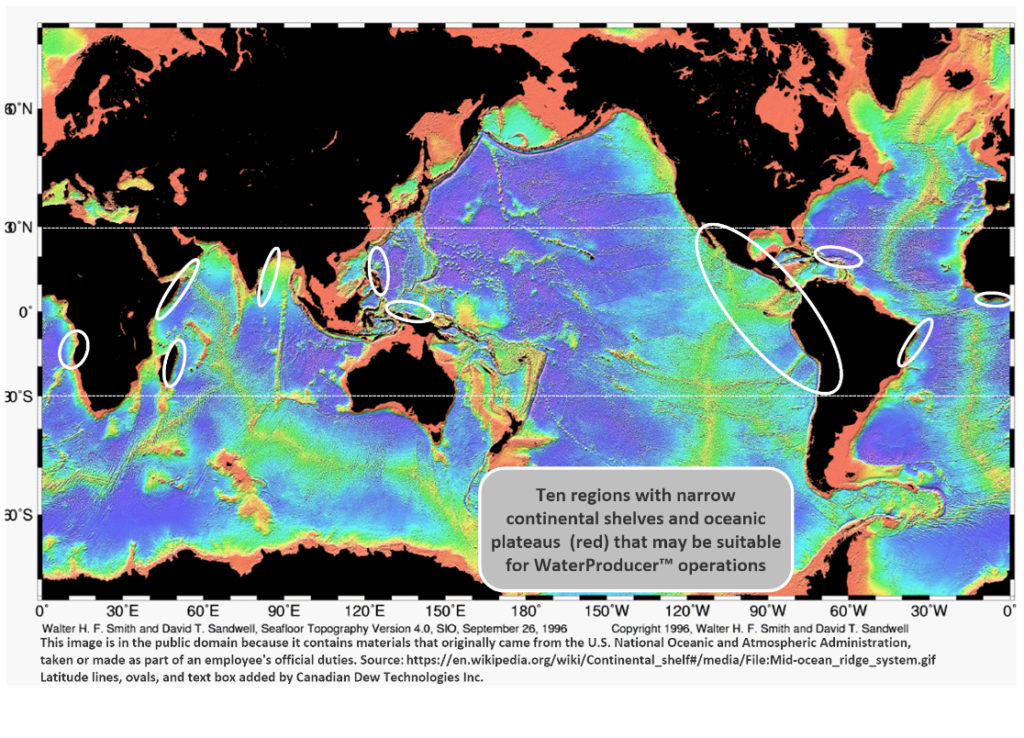
TTC Canada, in partnership with CanDew, will conduct a comprehensive viability and feasibility assessment to determine the suitability of deploying the WaterProducer™ system at your location. This evaluation will consider local climatic, environmental, and infrastructure conditions to quantify achievable water production rates and system performance. Following a positive assessment, we will develop the full project scope—including engineering design, facility configuration, and implementation planning—to deliver the required water‑production capacity.